2026-09-19 ·
Los Angeles Commercial Dumpster Placement Rules by Neighborhood
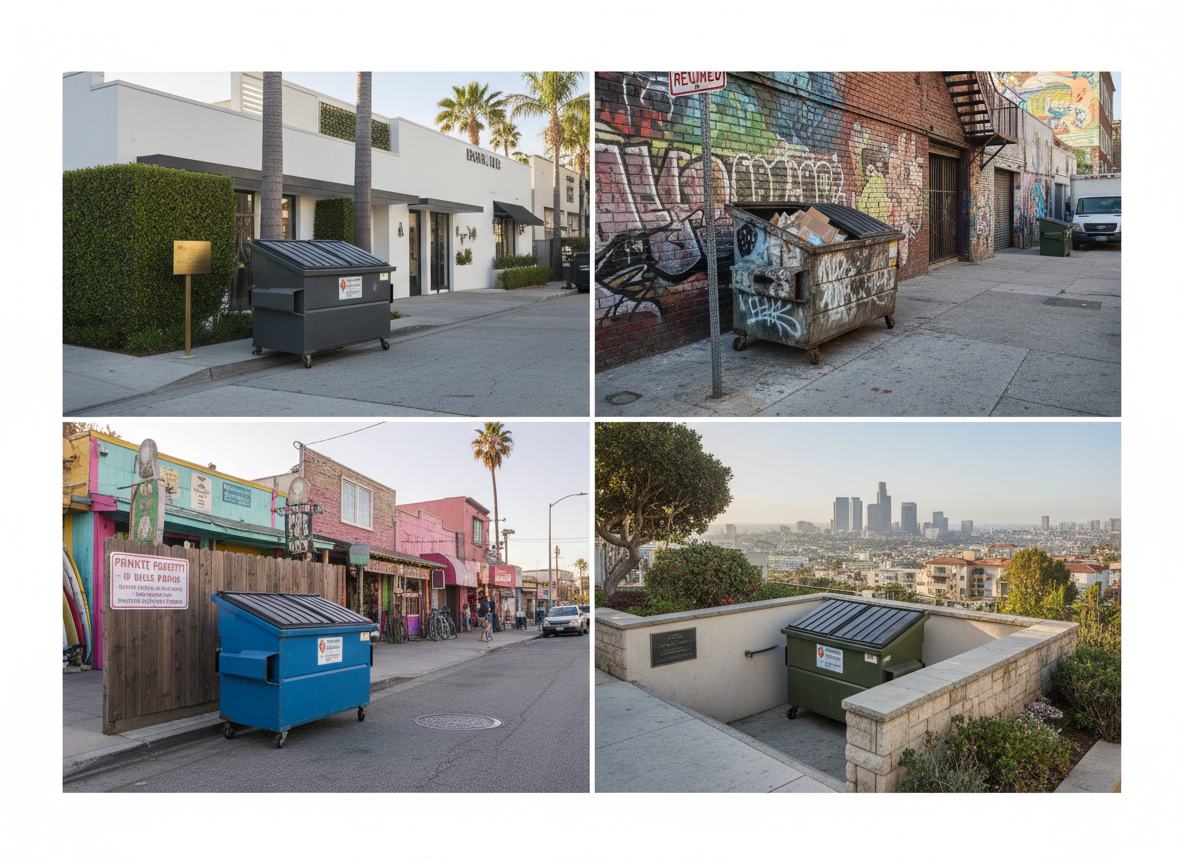
Commercial dumpster placement in Los Angeles requires neighborhood-specific permits and positioning that accounts for narrow streets in older districts and high foot traffic near landmarks such as the Hollywood Sign and Santa Monica Pier. Rules often mandate setbacks from fire hydrants, clear sight lines at intersections, and approval from the Los Angeles Department of Public Works before a unit can sit on public right-of-way.
Downtown Los Angeles Placement Considerations
Downtown blocks feature dense high-rise offices and older industrial buildings with limited curb space. Placement typically needs a sidewalk encroachment permit because many streets lack wide shoulders, forcing units onto the pavement itself. Mediterranean climate conditions keep placement feasible year-round, yet warm dry summers increase dust from nearby construction sites, requiring tarps or covers to meet air-quality standards. Operators routinely coordinate with building management to stage units during off-peak delivery hours to avoid conflicts with delivery trucks serving the garment district. Narrow alleys behind structures built before 1950 further restrict roll-off access, often requiring smaller containers or rear-loading models.
Hollywood and West Hollywood Rules
Hollywood streets around the Walk of Fame and Universal Studios see constant tourist and production traffic that limits daytime placement windows. Local rules require advance notification to the Hollywood Business Improvement District and often restrict units to alleys or private lots rather than public sidewalks. The mix of pre-war apartments and modern studios creates variable curb heights that affect stable positioning on sloped terrain. Nearby West Hollywood adds its own permitting layer focused on protecting pedestrian zones near Santa Monica Boulevard. These constraints make early coordination essential for commercial accounts generating steady cardboard and packaging waste.
Venice, Santa Monica, and Coastal Neighborhoods
Coastal neighborhoods such as Venice and Santa Monica impose stricter rules tied to beach proximity and tourism volume. Units near the Santa Monica Pier must maintain clear emergency-vehicle access lanes and often require additional reflective markings. Salt air accelerates corrosion on metal containers, prompting operators to schedule more frequent inspections. Residential streets in these areas frequently ban overnight street placement, pushing commercial accounts toward shared private lots or rear-yard staging. The flat terrain simplifies maneuvering compared with inland hills, yet high summer visitor counts increase the chance of blocked access during peak hours.
Silver Lake, Echo Park, and Koreatown Guidelines
Hilly streets in Silver Lake and Echo Park demand wheel chocks and level blocking to prevent shifting on grades common in these hillside neighborhoods. Koreatown’s dense mix of restaurants and multi-family buildings creates high-volume food waste that requires frequent swaps, so placement must allow easy truck access without blocking narrow one-way streets. Both areas fall under Los Angeles Bureau of Sanitation guidelines that limit container duration on public property to 30 days without extension approval. Operators serving these zones often recommend permanent dumpster placement options for consistent commercial accounts to reduce repeated permitting cycles. Commercial Dumpster Rental details help businesses match container size to daily output while staying compliant.
Practical Next Steps for Los Angeles Businesses
Review the specific block’s curb regulations through the city’s online permitting portal before scheduling delivery. Factor in how the region’s dry summers and occasional winter rains affect surface conditions at each site. For deeper planning on container sizing suited to office buildings or seasonal event surges, consult How to Size a Commercial Dumpster for Los Angeles Office Buildings and What Influences Commercial Dumpster Service Pricing in Los Angeles. Service remains available Mon–Sun 24/7 across Los Angeles County neighborhoods to accommodate varied business schedules.